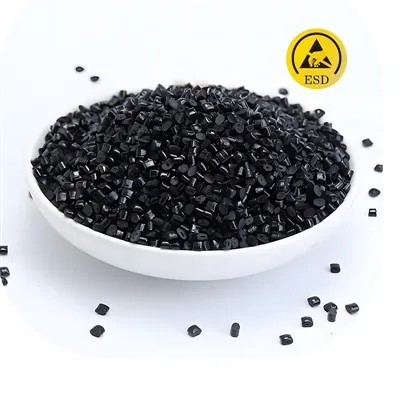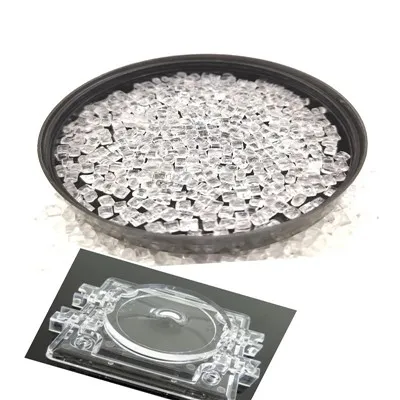

The most fundamental characteristic of antistatic additives is reducing the resistivity of materials and preventing static electricity accumulation. Their core indicators typically include surface resistivity, volume resistivity, and charge decay time. Different materials have different requirements for antistatic performance; generally, materials with a surface resistivity between 10^9 and 10^12 Ω are considered to have good antistatic properties. Antistatic agents introduce hydrophilic groups, ionic groups, or conductive channels, allowing trace amounts of water molecules to be adsorbed or migrated on or within the material surface, thereby rapidly releasing static charge and reducing dust adsorption, spark risk, and electrostatic interference.
In terms of physicochemical properties, antistatic additives possess good thermal stability, chemical stability, and dispersibility. They need to maintain structural and performance stability under high-temperature processing conditions (such as injection molding, extrusion, and blown film) and not react adversely with the base material. Simultaneously, to ensure effectiveness, antistatic agents should be easily and uniformly dispersed in plastics, coatings, or fibers without affecting the material's transparency, flexibility, and mechanical properties. For masterbatch or liquid dispersion products, dispersibility directly determines the uniformity and persistence of the antistatic effect.
Antistatic additives possess long-term effectiveness and controllable migration. Migration refers to the ability of an antistatic agent to migrate from the interior of a material to its surface to form an effective conductive layer. Excessive migration speed can lead to surface performance degradation, while insufficient migration speed can affect the initial antistatic effect. Therefore, high-quality antistatic agents often balance rapid initial action with long-term stability, ensuring the material maintains good antistatic performance throughout its entire service life while meeting environmental and safety requirements.