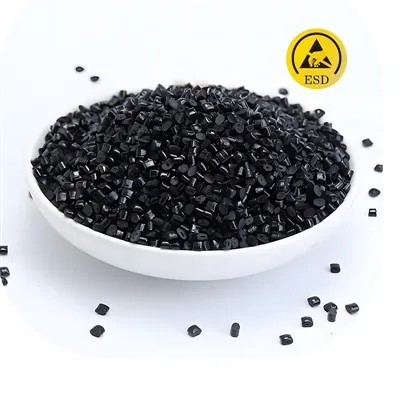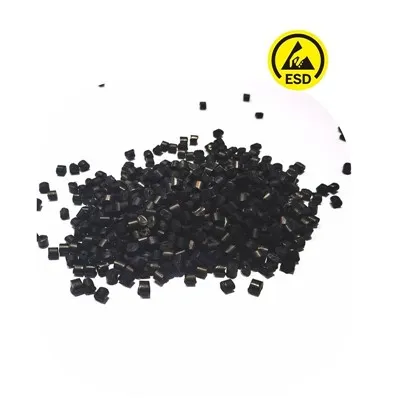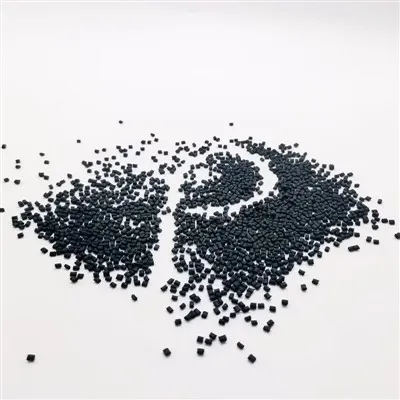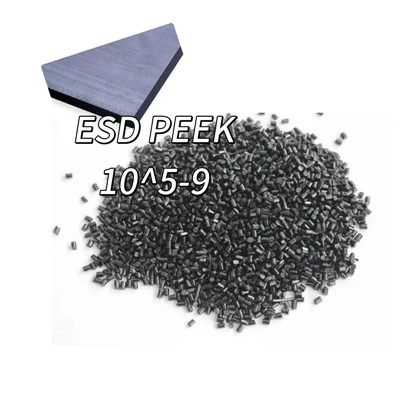

Standard pure plastic is an insulator. Think of it like a closed highway with no exit. When friction happens during production, packaging or transportation, static electric charges build up on the plastic surface. These charges cannot flow away. If too much static accumulates, a sudden electrostatic spark will form. This tiny invisible discharge is enough to break delicate semiconductor chips and electronic components, leading to unexpected product failures.
So how do we turn ordinary plastic into anti-static or conductive plastic? The core principle is easy to understand. We blend special conductive additives into plastic pellets before molding.
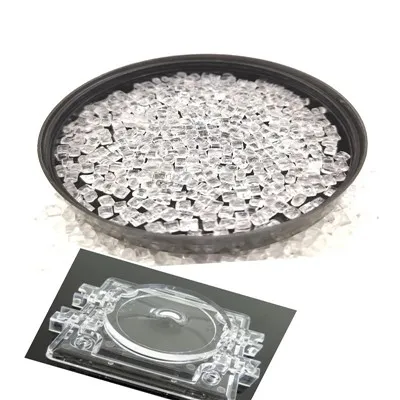
You can imagine the plastic base material as a solid block of transparent resin. The conductive additives are countless tiny conductive particles scattered inside. When we add enough of these conductive materials, the separate particles start touching one another and link up. Gradually, they create a continuous, interconnected network of conductive pathways running through the whole plastic product.
Once this internal conductive network is formed, static charges trapped on the plastic surface are no longer locked in place. Instead of building up to dangerous levels, static electricity can travel gently along these internal conductive paths. The charge slowly spreads and dissipates safely into the surrounding environment or the ground. No massive static charge accumulates, and destructive sudden sparks are avoided.
We can adjust the dosage and type of conductive filler to control the density of this conductive network. This lets us precisely tune the surface resistivity of finished plastic products. We can produce static-dissipative grades for general ESD protection, or highly conductive grades for applications such as carrier tapes, conductive sheets and electronic component packaging.
It is worth noting that not all anti-static solutions perform equally. Low-molecular anti-static additives only work temporarily. They migrate to the surface and wash off easily after contact or cleaning. In contrast, permanent conductive masterbatches and compounds build stable conductive networks inside the plastic matrix. The conductive structure stays intact for the entire service life of the product, delivering consistent long-term anti-static performance.
For semiconductor manufacturing, electronic assembly and precision component packaging, stable ESD protection is non-negotiable. Our customized conductive and anti-static compounds and masterbatch solutions help manufacturers modify plastics such as ABS, PA, PC, PE, PP, PS, PPO and PPS. Finished parts reliably disperse static charges, prevent electrostatic damage, and effectively safeguard sensitive electronic products throughout processing, transit and storage.