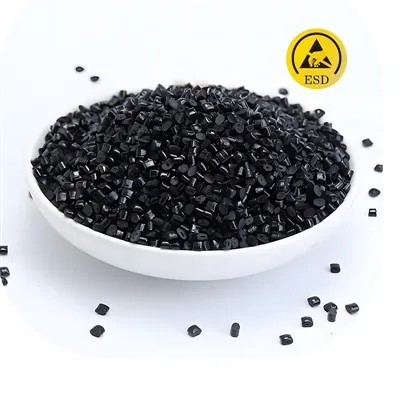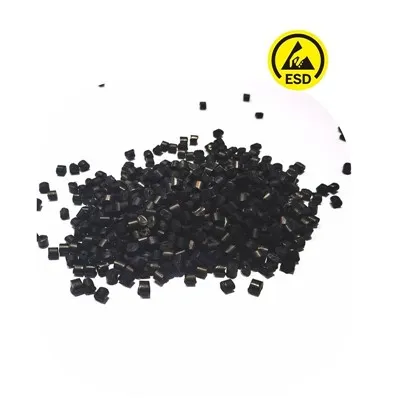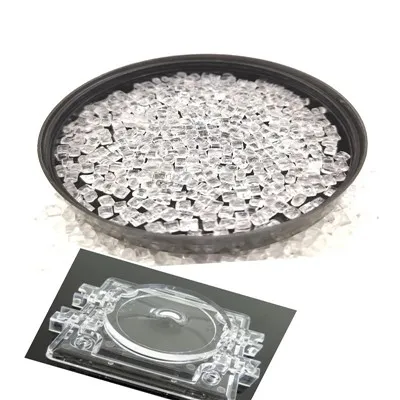

As additive manufacturing expands into electronics manufacturing, semiconductor assembly and ESD-controlled workspaces, demand for reliable ESD-safe FDM 3D-printing filament keeps rising rapidly. Filament manufacturers are facing common pain points: unstable surface resistivity, poor layer-to-layer adhesion, filament brittleness and frequent wire breakage during extrusion and printing. Besides conductive fillers selection, picking the correct base polymer plays a decisive role in final filament quality.
For ESD-safe filament targeting surface resistivity within 10⁶-10¹¹ Ω/sq, multi-wall carbon nanotubes (MWCNT) are the preferred conductive filler rather than high-loading carbon black. Heavy carbon black loading (12-18 wt%) will severely damage filament toughness and inter-layer bonding, making it unsuitable for FDM processing. By contrast, MWCNT can achieve target ESD performance at low loading of 0.6-1.2 wt%, preserving most original mechanical properties of base resin.
Mainstream substrate options for ESD-safe 3D-printing filament
1. ABS
ABS remains one of the most established engineering bases for ESD filament. It delivers balanced toughness, good melt flow and moderate cost. It works well for indoor ESD jigs, PCB assembly fixtures and electronic tooling. Limitations: heat resistance is moderate (HDT around 70-80 °C). It requires closed heated-chamber 3D printers to minimize warpage, and pre-drying before processing. Not suitable for long-term outdoor exposure.
2. PC/ABS Alloy
PC/ABS is the premium industrial-grade choice for ESD-safe filament. Blending PC/ABS alloy brings improved heat deflection (95-110 °C), higher impact strength and better dimensional stability versus neat ABS. This alloy fits high-temperature ESD fixtures and electronic equipment housings. Note: PC/ABS needs strict drying before extrusion. Carbon nanotube filled grades will cause slight nozzle wear; hardened-steel nozzles are recommended. Due to its two-phase blend structure, CNT dispersion control must be carefully managed to avoid resistivity fluctuation across finished parts.
3. PETG
PETG-ESD has gained fast-growing market share. Its biggest advantage is low warpage, and it does not fully depend on a closed build chamber. It offers good toughness and fair chemical resistance, making it ideal for desktop-machine-produced ESD filament for electronic enclosures and protective components. Its heat resistance is moderate (~75-80 °C).
4. PLA
PLA-ESD features easy printing and low production cost. However, low thermal deformation temperature and inherent brittleness restrict its usage only for prototype samples, not functional production-grade ESD parts.
5. PA series (PA612 preferred)
Polyamide delivers outstanding toughness and chemical resistance. PA612 is more suitable for 3D-printing than standard PA6 due to lower moisture absorption. It targets high-end industrial wear-resistant ESD tooling. Strict pre-drying is mandatory for filament extrusion.
6. Pure PC, TPU, PEEK / PEKK
Pure PC-ESD: outstanding heat resistance, yet high warpage makes printing difficult.
TPU-ESD: flexible antistatic filament for soft gaskets and flexible fixtures.
PEEK / PEKK-ESD: ultra-high-performance niche material for aerospace-electronics scenarios with high cost.

Quick selection guidance for filament producers
Cost-sensitive indoor ESD jigs: ABS + MWCNT masterbatch
Industrial fixtures requiring better heat resistance: PC/ABS alloy
Production without closed-chamber 3D-printers: PETG substrate
High-end wear-resistant functional tooling: PA612
Sugo Advanced Materials supplies carbon-nanotube-based conductive masterbatch tailored for above-mentioned base resins. Our masterbatch features good dispersion, low percolation threshold and stable resistivity, helping filament manufacturers shorten formulation development cycles and obtain consistent-quality ESD-safe 3D-printing filament.
If you are developing antistatic 3D-printing filament grades, feel free to contact our technical team for formulation support and sample evaluation.