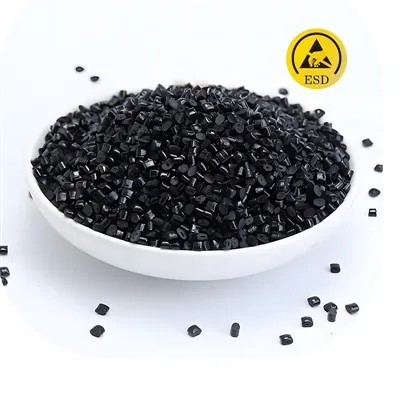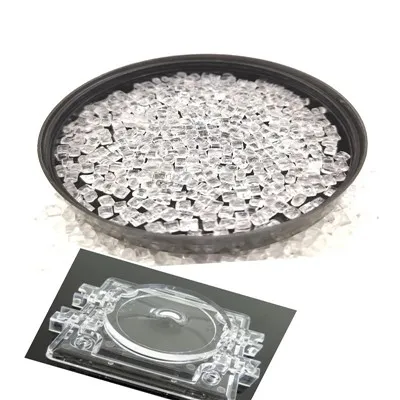

After working with semiconductor carrier tape manufacturers for a decade, I've seen countless production issues caused simply by choosing the wrong ESD HIPS material.
Many factories blame their extrusion or forming process for common defects like erratic anti-static values, black blooming on sheet surface, tiny fisheyes, or cracked carrier tape during SMT mounting. But in most cases, the root cause lies in the raw material itself.
Based on real production feedback from our long-term partners, I've sorted out four practical, factory-tested standards for selecting HIPS compound dedicated to semiconductor carrier tape production.
1. Reliable, Batch-Consistent ESD Performance
Anti-static HIPS comes in many grades, but few fit precision semiconductor packaging. For IC and SMD component protection, the surface resistance must be consistently locked in the 10⁶–10⁹ Ω/sq range.
Stay away from low-grade materials with obvious batch-to-batch differences or unstable resistance in high-temperature and humid environments. Steady static dissipation is the basic guarantee to avoid static damage to delicate electronic parts.
2. No Migration, No Blooming (The Top Priority)
This is the biggest difference between regular ESD HIPS and semiconductor-grade HIPS. Most cheap carbon-filled HIPS adopts low-grade lubricants and poorly dispersed carbon black.
After a period of storage, these materials will develop surface powder precipitation and blooming. The falling carbon powder will directly contaminate chip pins and circuit surfaces, leading to defective products.
Qualified carrier tape HIPS must feature zero migration - no powder shedding, no surface frosting, fully suitable for high-precision electronic packaging scenarios.
3. Stable Extrusion Performance for Continuous Mass Production
Carrier tape production is a long-cycle, continuous extrusion process, which places high demands on material machinability.
Professional dedicated HIPS compound has a melt flow index perfectly matched with virgin HIPS resin. It ensures steady strand output, uniform sheet thickness, and no obvious black spots or fisheyes on the finished sheet.
More importantly, it effectively reduces die carbon deposition, avoids frequent machine shutdown and cleaning, and greatly improves overall production efficiency.
4. Well-Balanced Toughness and Stiffness
High carbon black addition will inevitably reduce the toughness of HIPS material. Many low-cost materials are overly brittle, resulting in frequent cracking during deep drawing forming or automatic SMT feeding.
Custom carrier tape-grade HIPS adopts optimized formula design to balance rigidity and ductility perfectly, adapting to various deep-forming carrier tape structures and meeting automated packaging production needs.
Wrap-up
Carrier tape-specific HIPS is never a simple modified plastic. It is a professional functional material customized for the semiconductor packaging industry with strict technical thresholds.
Our static-dissipative HIPS compound is developed and produced strictly in line with the above factory practical standards. It solves the common pain points of traditional materials, with stable ESD performance, no blooming, excellent processability and balanced mechanical properties - the ideal choice for mass production of single-layer ESD carrier tape.
If you're sourcing stable, semiconductor-grade HIPS materials for your carrier tape production line, feel free to send me a message. I can share detailed technical parameters and arrange free sample testing to help you optimize your production quality from the source.
#HIPSCarrierTape #ESDHIPS #SemiconductorPackaging #SMDPackaging #ElectronicMaterials #FunctionalPlastics #ManufacturingSolutions #QualityProduction