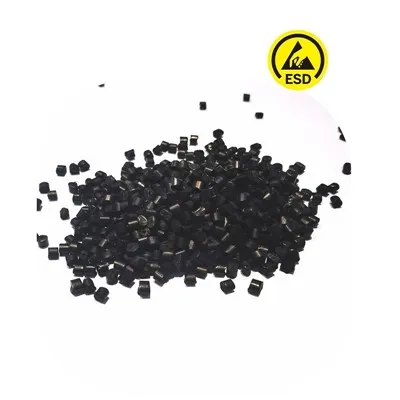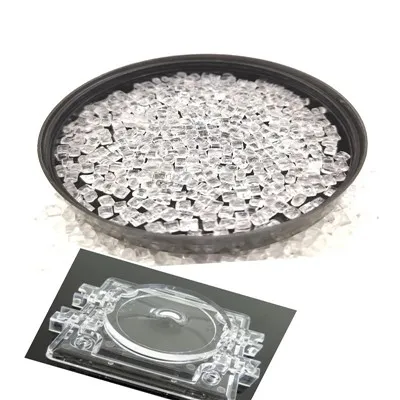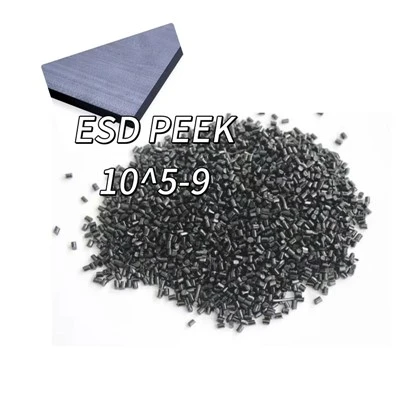

Good PEEK raw material, but still struggling to produce antistatic PEEK plates? Before adjusting your extruder again, it may be time to look at the compound itself and the interaction between material properties and processing conditions.

If you already manufacture antistatic PVC, PC or POM plates, expanding into antistatic PEEK plates may seem like a natural next step. You have extrusion experience, established production equipment and a good understanding of electrostatic discharge (ESD) materials.
Yet, when you start your PEEK extrusion trials, things may not go as planned.
The melt may slip or fail to convey consistently. The extruded plate may not meet your target surface resistivity. Even more frustrating, the ESD readings may fluctuate significantly from one sample to another.
You adjust the temperature profile, change the screw speed and repeat the trial, but the results remain inconsistent.
So, what is going wrong? Is it the PEEK raw material, the antistatic formulation or the extrusion process?
In many cases, the answer lies in how these factors work together. Choosing a suitable antistatic PEEK compound and establishing the right processing conditions are both important steps toward producing plates with consistent electrostatic performance.

1. Three Common Challenges in Antistatic PEEK Plate Production
Problem 1: Unstable Melt Conveying During Extrusion
PEEK has a high processing temperature requirement, and its melt behavior must be compatible with the design and operating conditions of the extrusion line.
When the compound's rheological properties do not match the processing setup, manufacturers may experience unstable material conveying, inconsistent output or other extrusion difficulties.
Simply increasing or decreasing the barrel temperature may not solve the problem. The compound formulation, mold design, cooling system, screw configuration, temperature profile, screw speed and throughput may all need to be evaluated together.
Problem 2: The Extruded PEEK Plate Fails to Meet the Target ESD Value

Producing a PEEK plate with the right appearance and dimensions does not automatically mean it will meet the required antistatic performance.
The electrical properties of the final plate depend on the formulation and conductive or antistatic system, as well as how the material is processed. The selected compound must be suitable for the intended surface resistivity range and application.
If the extruded plate fails to meet the target, it is important to investigate the compound grade, its recommended loading or formulation, processing conditions and test method rather than assuming that the base PEEK resin is the only factor involved.
Problem 3: Surface Resistivity Fluctuates Beyond the Acceptable Range
For manufacturers supplying ESD-safe plastic plates, achieving a target value in one sample is not enough. Repeatability matters.
Large variations in surface resistivity can create difficulties in quality control, production acceptance and customer qualification.
Potential contributing factors include compound dispersion, formulation consistency, processing stability, sample conditioning and measurement procedures. Identifying the actual cause requires systematic testing instead of repeatedly changing machine settings without a clear plan.
2. Why Good Raw Materials Alone May Not Be Enough
When antistatic PEEK plate extrusion fails, it is tempting to focus entirely on the quality of the PEEK resin or to keep adjusting the extruder.
However, successful production depends on the complete material-processing system.
Three factors deserve particular attention:
- Compound formulation. The antistatic or conductive system must be appropriate for the target electrical performance and the intended processing method.
- Extrusion conditions. Processing temperatures, screw speed, material throughput and screw configuration must be evaluated in relation to the compound's flow and thermal behavior.
- Technical support during trials. A supplier who understands both the compound and its intended application can help identify potential causes, establish a systematic trial plan and interpret the results.
The goal is not simply to make one acceptable plate. It is to establish a process that can repeatedly produce plates meeting the agreed specifications.
3. How to Improve the Success Rate of Antistatic PEEK Plate Trials
If you are developing a new antistatic PEEK plate, consider the following approach.
Step 1: Define the target performance.
Confirm the required surface resistivity range, plate dimensions, mechanical requirements and intended application before selecting the compound.
Step 2: Select a compound designed for the intended process.
Make sure the supplier understands that your application is PEEK plate extrusion, rather than assuming a grade developed for a different processing method will perform identically.
Step 3: Establish a controlled extrusion trial.
Follow the compound supplier's recommended processing window where available. Record key parameters, including temperature settings, screw speed, throughput and observations of melt behavior.
Step 4: Measure electrical performance consistently.
Use an agreed test method and controlled measurement conditions. Test representative samples from different positions or production runs where appropriate, and compare the results against your target specification.
Step 5: Troubleshoot systematically.
If melt conveying is unstable or surface resistivity is outside the target range, change relevant variables in a controlled manner. This helps distinguish material-related issues from processing or measurement issues.
4. How SUGO Supports Antistatic PEEK Compound Development
At Jiangxi SUGO Advanced Materials Co., Ltd., we understand that industrial customers need more than a compound that looks good on a technical data sheet. They need a material that is suitable for their production process and intended application.
For manufacturers developing antistatic PEEK plates, the selection of a suitable compound and the evaluation of extrusion conditions are important parts of the development process.
Our approach is to understand the customer's target surface resistivity, plate application, extrusion equipment and existing production challenges before discussing a suitable material solution.
Technical communication during trial production can help customers evaluate melt behavior, investigate ESD performance and work toward more consistent results.
Every extrusion line and formulation is different, so recommendations should be based on the actual material grade, equipment and trial results.
5. Looking for an Antistatic PEEK Compound for Plate Extrusion?
If you manufacture antistatic engineering plastic plates and are planning to expand into PEEK, or if your current antistatic PEEK extrusion trials have not achieved the expected results, discussing your application with an experienced compound supplier may be a useful next step.
When contacting SUGO, please share your target surface resistivity, plate thickness, extrusion equipment, show cooling system and mold, as well as the main problem encountered during production. If available, include your current processing conditions and ESD test results.
This information can help us understand your requirements and discuss the next steps for material evaluation and trial production.
Contact Jiangxi SUGO Advanced Materials Co., Ltd. to discuss your antistatic PEEK plate application and compound requirements.
Whatsapp: 8613712709909
Email: eileen@sugoplas.com
Note: Final ESD performance and processability depend on the selected compound, equipment, processing conditions and test method. Target specifications should be confirmed through application-specific trials.