
Safety and Environmental Protection in Use
When using antistatic additives, safety and environmental protection requirements must be considered first. Some low molecular weight antistatic agents are volatile or hygroscopic; direct skin contact or inhalation of dust may cause irritation. Therefore, gloves, masks, and protective eyewear should be worn during handling. For chemically synthesized or ionic antistatic agents, storage conditions must be strictly controlled to avoid high temperatures, humidity, and direct sunlight to prevent decomposition or inactivation. Simultaneously, national and local environmental regulations should be followed, selecting environmentally friendly antistatic agents that comply with REACH, RoHS, and other standards to ensure that they do not cause harm to human health or the environment during production and use.
Performance Control and Dosage
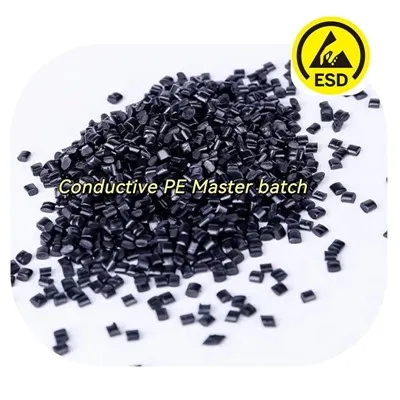
The dosage and uniformity of the antistatic agent directly affect the antistatic effect of the product. Generally, the dosage in the masterbatch or polymer is controlled within the range of 0.2% to 3%, optimized according to the material type and application requirements. Excessive addition may lead to precipitation, oil spots, or decreased mechanical properties on the material surface, while insufficient addition will fail to achieve the expected antistatic effect. Meanwhile, pay attention to the compatibility of antistatic agents with different materials. Some polymeric or ionic antistatic agents may affect the processing performance of polyolefins, PVC, or ABS. The addition method and ratio should be adjusted through small-scale testing.
Processing and Application Precautions: During processing, the processing temperature and time should be controlled to avoid excessive thermal decomposition or migration, ensuring long-term stability of antistatic properties. For injection molding, extrusion, or blown film processes, homogenization should be performed first to ensure uniform dispersion of the antistatic agent and avoid inconsistent local performance. In coatings, fibers, and coating applications, the surface should be kept clean and at appropriate humidity to allow the antistatic agent to form a stable conductive film. Furthermore, under long-term use or high-temperature environments, the surface resistivity and charge decay performance of the material should be monitored regularly, and replenishment or replacement should be made as necessary to ensure that the product maintains effective antistatic function throughout its service life.